
Most of the women love wearing makeup, as they feel it can help
them enhance their beauty and make them feel and look more attractive and
gorgeous. While some cosmetics are useful for making the skin feel soft,
healthy and flawless, others assist in adding color to the skin, thereby giving
the appearance of good health and youth. So, whether you want to hide the
little imperfections or conceal a blemish, cosmetics come in very handy at
masking the small flaws and marks on any part of the body. But then the
question arises - are cosmetics efficient enough to give you a radiant and
good-looking skin forever? Yes comes the reply instantly! With over a thousand
different cosmetics available at your end, cosmetics are the solution to every
beauty problem stated by different people. Given here are some different types
of cosmetics for your knowledge. Check them out.
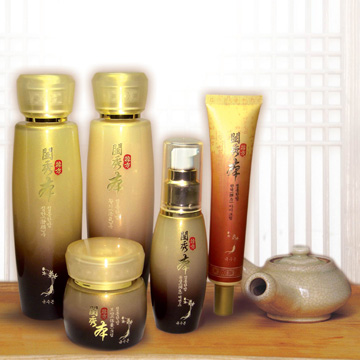
Different Kinds Of Cosmetics
Solutions
The simplest kind of cosmetics, solution cosmetics is
homogeneous mixtures of soluble ingredients. These are prepared by simply filling
the containers with main diluent (usually water) and mixing with the other
ingredients to create the resultant cosmetic product. They can be found in the
form of shampoos, body wash, hand cleansers, mascaras, eye liners, colognes,
and so on.
Creams/ Emulsions
Most of the cosmetics contain raw materials that are not
compatible. Hence, creams or emulsions are preferred. These are pseudo stable
mixtures of immiscible liquids dispersed in another liquid. Creams and
emulsions are prepared by combining three formula components, such as oil
phase, aqueous phase and an emulsifier. Cosmetics like hand moisturizers, make
up, hair conditioners, sunscreens, etc. are all examples of creams or
emulsions.
Suspensions
Suspensions are cosmetics that are used for overcoming
incompatible ingredients. Similar to creams, suspensions are clear solutions
containing visible particles, such as gelatin beads or inorganic minerals,
spread throughout. Sunscreens, hand washes and shampoos are some such examples.
Lotions
Lotions are less greasy and lighter counterparts of creams that
come in handy for applications, wherein creams cannot be used. Lotions are
basically thin creams that undergo the same production procedure as that of
creams. Moreover, they can easily be applied without worrying about them
getting thick as opposed to emulsions that get thick on cooling down. A few
examples of lotion cosmetics include facial moisturizers, leave-in hair
conditioners and moisturizing cleansers.
Ointments/ Pastes
Ointments or pastes are extremely thick products used for
dressing hair and cleaning skin. They are, generally, anhydrous (contain no
water), sticky and greasy.
Powders
Powders are the most common and popular form of cosmetic
products. They are an amalgamation of solid raw materials which are ground
together to get a fine powder. Products like baby powder, eye powder, foot
powder, talcum powder, etc. are some examples.
Gels
Gels are thick, clear products characterized by a property known
as “shear thinning”. That is, they are thick when new but get thin and flowable
as you start applying force to use them. Common examples of gels include hair
products, body washes, shaving products and toothpastes.
Tablets & Capsules
Color cosmetics are, generally, found in the form of cakes,
tablets or capsules. The solid ingredients are blended well with one another
and pressed to get the desired shape. They are usually more expensive as they
require special equipment for creating them. Compact powder, eye shadow, cheek
shadow cakes, etc. are some examples.
Sticks
Sticks enter the cosmetic product list when consumers look out
for cosmetics that they would not want to touch, say, lipstick or underarm
deodorant. Sticks are solid delivery forms that are delivered by rubbing them
against the skin. These are usually manufactured by heating, melting, mixing
and pouring solid ingredients into a mold or final container, thereby allowing
them to cool until they take the desired shape.
No comments:
Post a Comment